



Glutathione Reductase (GR)
Glutathione Reductase
Glutathione reductase (GR) is a flavoenzyme whose main function is to catalyze the reduction of oxidized glutathione (GSSG) to reduced glutathione (GSH), playing a crucial role in the redox balance of cells. Glutathione reductase maintains the dynamic equilibrium between the two forms of glutathione within the cell, indirectly participates in antioxidant processes such as the elimination of reactive oxygen species in the cell, and protects cells from oxidative damage. In addition, it is also involved in the detoxification processes of organs such as the liver. Abnormal activity of glutathione reductase can lead to cellular redox imbalance and plays an important role in the occurrence and development of cardiovascular diseases, neurodegenerative diseases, hemolytic anemia, liver diseases, etc[1].
All Product Categories
-
Glutathione Reductase (GR) Related Products (9)
Related Products (9)

-
Antibodies (1)
-
Zinc sulphate
 0 ImagesZinc sulphate is an orally active inhibitor of tyrosinase and glutathione reductase. Zinc sulphate enhances the activity of dopachrome tautomerase. Zinc sulphate delays anagen-related eumelanin production, induces hair hypopigmentation in mice, and accelerates wound healing. Zinc sulphate can be used in research related to benign gastric ulcers. Zinc sulphate can be used in research related to rheumatoid arthritis.
-
Notoginsenoside Ft1
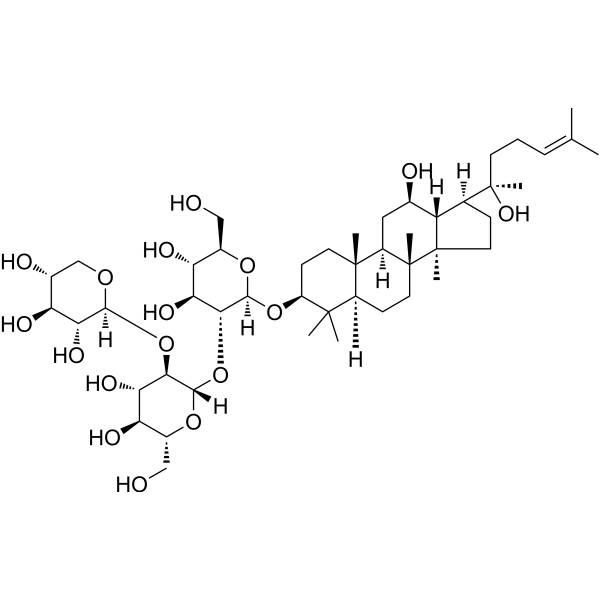 0 ImagesNotoginsenoside Ft1 is an orally active bioactive saponin. Notoginsenoside Ft1 inhibits the PI3K/AKT/mTOR signaling pathway, activates the p38 MAPK and ERK1/2 signaling pathways, and increases the proportion of CD8+ T cells, thereby inducing apoptosis and lysosomal cell death in various cancer cells, and promoting angiogenesis. Notoginsenoside Ft1 causes vasodilation by activating glucocorticoid receptors (GR) and estrogen receptor beta (ERβ) in endothelial cells. Notoginsenoside Ft1 increases intracellular Ca2+ accumulation, reduces cAMP levels by activating a signaling network mediated through P2Y12 receptors, and promotes platelet aggregation, thereby exerting a procoagulant effect. Notoginsenoside Ft1 inhibits ferroptosis (ferroptosis) in renal tubular epithelial cells by activating the TGR5 receptor, thereby demonstrating a renal protective effect. Notoginsenoside Ft1 acts as a TGR5 agonist and an FXR antagonist to combat obesity and insulin resistance.
-
Glyoxal (40% w/w in water)
 0 ImagesGlyoxal (40% w/w in water) is an α-oxoaldehyde that inhibits Aldose Reductase, Glutathione Reductase, and NADPH synthase. Glyoxal (40% w/w in water) exhibits cytotoxicity, triggers oxidative stress, induces ROS accumulation, lipid peroxidation, mitochondrial membrane potential collapse, DNA damage, apoptosis, and massive production of advanced glycation end products (AGEs). Glyoxal (40% w/w in water) depletes glutathione and activates MAPK phosphorylation. It has lower toxicity as a fixative than paraformaldehyde (PFA) and serves as a precursor for the synthesis of oxalates and dietary carcinogens. Glyoxal (40% w/w in water) is suitable for research related to calcium oxalate kidney stones, diabetes, atherosclerosis, cardiovascular diseases, retinopathy, and cataracts.
-
Copper(I) oxide
 0 ImagesCopper(I) oxide is a weak inorganic base, oxidative stress inducer and cytotoxic agent. Copper(I) oxide generates ROS by impairing the activities of Catalase (HY-135849) and glutathione reductase. Copper(I) oxide can be used to activate halides for nucleophilic substitution reactions, and is also suitable for decarboxylation and ring condensation reactions.
-
Dantrolene-13C3
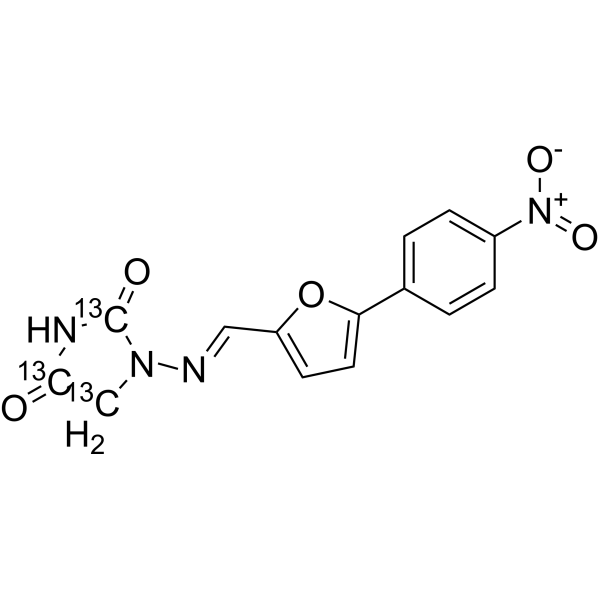 0 ImagesSynonyms: F 368-13C3Dantrolene-13C3 is the 13C3 labeled Dantrolene. Dantrolene (F368), a muscle relaxant, non-competitively inhibits human erythrocyte glutathione reductase. Ki and IC50 values are 111.6 μM and 52.3 μM, respectively. Dantrolene is a ryanodine receptor antagonist and Ca2+ signaling stabilizer. Dantrolene can be used for the research of muscle spasticity, malignant hyperthermia, Huntington's disease and other neuroleptic malignant syndrome.
-
C9S
 0 ImagesCat. No.: HY-184233C9S is an As (III)-PROTAC and arsenic-binding protein PROTAC degrader. C9S promotes the ubiquitination and degradation of arsenic-binding proteins such as Glutathione reductase. C9S binds to metallothionein. C9S exhibits anticancer activity against lung cancer. C9S can be used in lung cancer-related research.
-
Cryptopine
 0 ImagesCryptopine is a non-narcotic isoquinoline alkaloid. Cryptopine can reduce the activities of glutathione S-transferase (GST) and glutathione reductase (GR), depletes intracellular glutathione levels, stimulates lipid peroxidation, and induces cytotoxicity by disrupting the cellular defense system. Cryptopine binds stably to key targets of liver cancer and also exhibits anthelmintic activity against Dactylogyrus intermedius. Cryptopine can be used in studies related to liver cancer and Dactylogyrus intermedius infection.
-
Glutathione Reductase, Spinach
 0 ImagesCat. No.: HY-125862BGlutathione Reductase,Wheat germ (EC 1.6.4.2) is a crucial flavoenzyme in the antioxidant defense system. Reduced glutathione (GSH) is used by glutathione peroxidase to detoxify hydrogen peroxide and in the precess is converted to oxidized glutathione (GSSG). The GSSG is then recycled back to GSH by glutathione reductase (GR) using NADPH that is then converted to NADP+. The regenerated GSH is then available to detoxify more hydrogen peroxide. Glutathione Reductase uses FAD as a cofactor.
-
Glutathione Reductase,Wheat germ
 0 ImagesCat. No.: HY-125862AGlutathione Reductase,Wheat germ (EC 1.6.4.2) is a crucial flavoenzyme in the antioxidant defense system. Reduced glutathione (GSH) is used by glutathione peroxidase to detoxify hydrogen peroxide and in the precess is converted to oxidized glutathione (GSSG). The GSSG is then recycled back to GSH by glutathione reductase (GR) using NADPH that is then converted to NADP+. The regenerated GSH is then available to detoxify more hydrogen peroxide. Glutathione Reductase uses FAD as a cofactor.




